
The Narrator’s Eating Distress
Winter in SokchoThis flow follows the narrator’s cycles of appetite, restriction, shame, and self-punishment, while distinguishing them from the care food can also carry.
increasing Bearing strength in each event
 decreasing
Bearing strength in each eventdecreasingCounting Mouthfuls
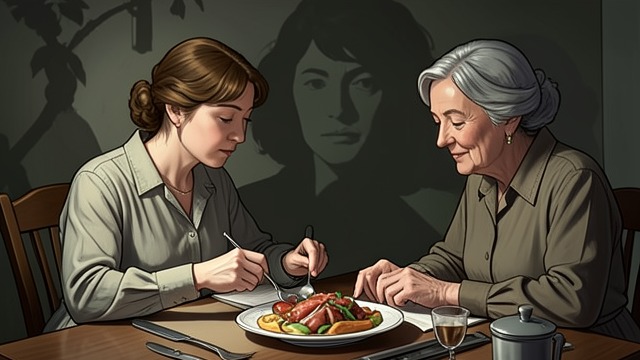
Counting Mouthfuls
Food as calculation
At a meal with her mother, the narrator tries to estimate how much she will eat by weighing the size of each mouthful. She then drinks and eats faster until she feels unable to stop.
The shift from calculation to compulsion reveals how little control the act of eating gives her.
Affection and shame
Her mother praises her appetite, but the narrator experiences the praise through discomfort and tears. Eating becomes a scene where love and distress occupy the same table.
A Body Compared

A Body Compared
Measuring herself
At the bathhouse, the narrator compares her breasts with those of other women and feels reassured by the comparison. The reassurance is brief and rests on ranking bodies against one another.
Her mother again says she has lost weight and should eat more, repeating a message the narrator finds intolerable.
Unstable reassurance
The narrator’s attention moves between fear of being too thin and discomfort about eating. No single judgment settles her relationship with her body.
The Holiday Overeating
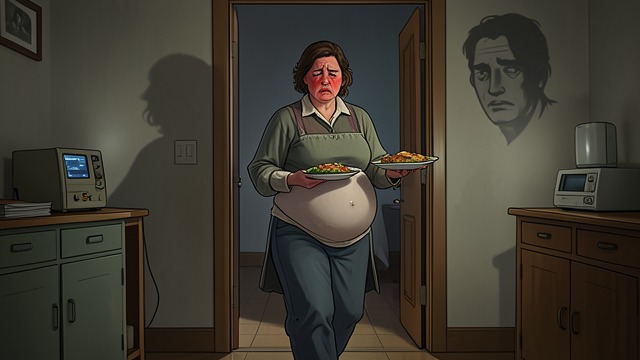
The Holiday Overeating
Eating under scrutiny
As relatives discuss her appearance and marriage, the narrator keeps ladling food into her mouth. Her aunt asks why she is stuffing herself, and the remark makes the act more painful.
Her mother objects to the criticism, but the narrator can no longer move the spoon from bowl to mouth with ease.
Leaving with pain
She abandons the gathering and walks back with a swollen, aching stomach. The episode links public judgment with the bodily aftermath of eating beyond comfort.
The Sausage and the Floor
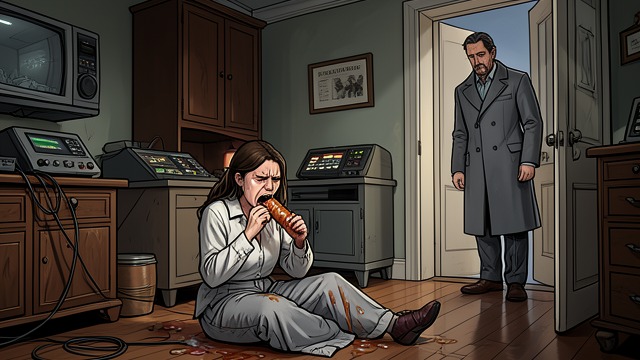
The Sausage and the Floor
A private collapse
After telling Yan Kerrand that his hero will not find a woman in Sokcho, the narrator returns to the kitchen. She unwraps the Soondae her mother has sent and eats frantically on the floor.
She keeps eating as disgust rises, then vomits bile onto her thighs.
Witness and care
Old Park finds her and takes her back to her room without asking questions. His quiet response offers immediate physical care without solving the shame and distress that produced the crisis.
The Weight of the Trousers
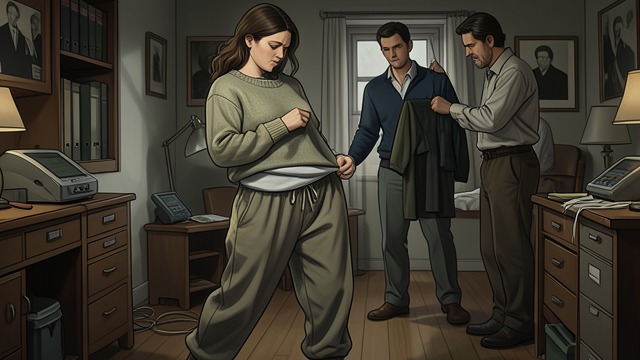
The Weight of the Trousers
A failed fit
In the laundry room, the narrator tries on a pair of forgotten trousers. They hang loose at the thighs but will not fasten at her waist, and she is close to tears.
Yan Kerrand enters carrying clothes, making her suddenly tug at her sweater to cover her legs.
Exposure and departure
The moment combines private bodily distress with the prospect of being seen. His impending departure makes the scene feel like one last exposure rather than a step toward resolution.
During the meal with her mother before Seollal
At the bathhouse before Seollal
On Seollal at the family meal
The night Yan Kerrand rejects her claim
Four days before Yan Kerrand leaves
